Blog
Beginner-friendly articles on market mechanics, risk, and trading habits.
Trading BasicsTrading and gambling both involve uncertainty, but the useful distinction is whether you have an edge, defined risk, repeatable rules, and a process you can test rather than whether money can be won or lost.
Trading BasicsLearn why win rate alone says very little about a trading strategy and how risk-reward ratio and expected value determine whether a repeatable process can make sense over time.
Trading BasicsUnderstand the difference between market price and intrinsic value, why they can diverge, and why price movement alone does not prove a company has become more or less valuable.
Trading BasicsLearn when financial markets are zero-sum, when they are not, and why stocks, derivatives, hedging, company value creation, and trading costs need to be separated before answering the question.
Risk ManagementA 20% loss needs a 25% gain to recover, while a 50% loss needs a 100% gain. Learn the simple math behind drawdown asymmetry and why loss control matters.
Risk ManagementLearn how account size, maximum acceptable loss, and stop distance work together to determine position size instead of choosing a random number of shares.
Risk ManagementRevenge trading is the urge to win money back immediately after a loss. Learn how it changes decision quality and how precommitted pause rules can interrupt the cycle.
Risk ManagementRisk tolerance is how much loss you can emotionally accept. Risk capacity is how much loss you can financially absorb. A sound trading plan needs both.
Risk ManagementVolatility measures how much prices move. Risk is about what those moves can do to your capital, plan, and ability to stay in the trade. Learn the difference before sizing any position.
Risk ManagementA stop loss is an order or rule. Thesis invalidation is the evidence that makes the original trade idea wrong. Learn why the two should be connected.
Trading BasicsLearn how to read a forex quote such as EUR/USD 1.0800, identify the base and quote currencies, and understand what an upward or downward move means.
Trading BasicsCompare an individual company share with a broad index ETF, including ownership, diversification, risk, fees, dividends, voting rights, and when each may fit a beginner’s goal.
Trading BasicsLearn why an existing fixed-rate bond can lose market value after rates rise, how yield and maturity affect the price, and why bond funds work differently from individual bonds.
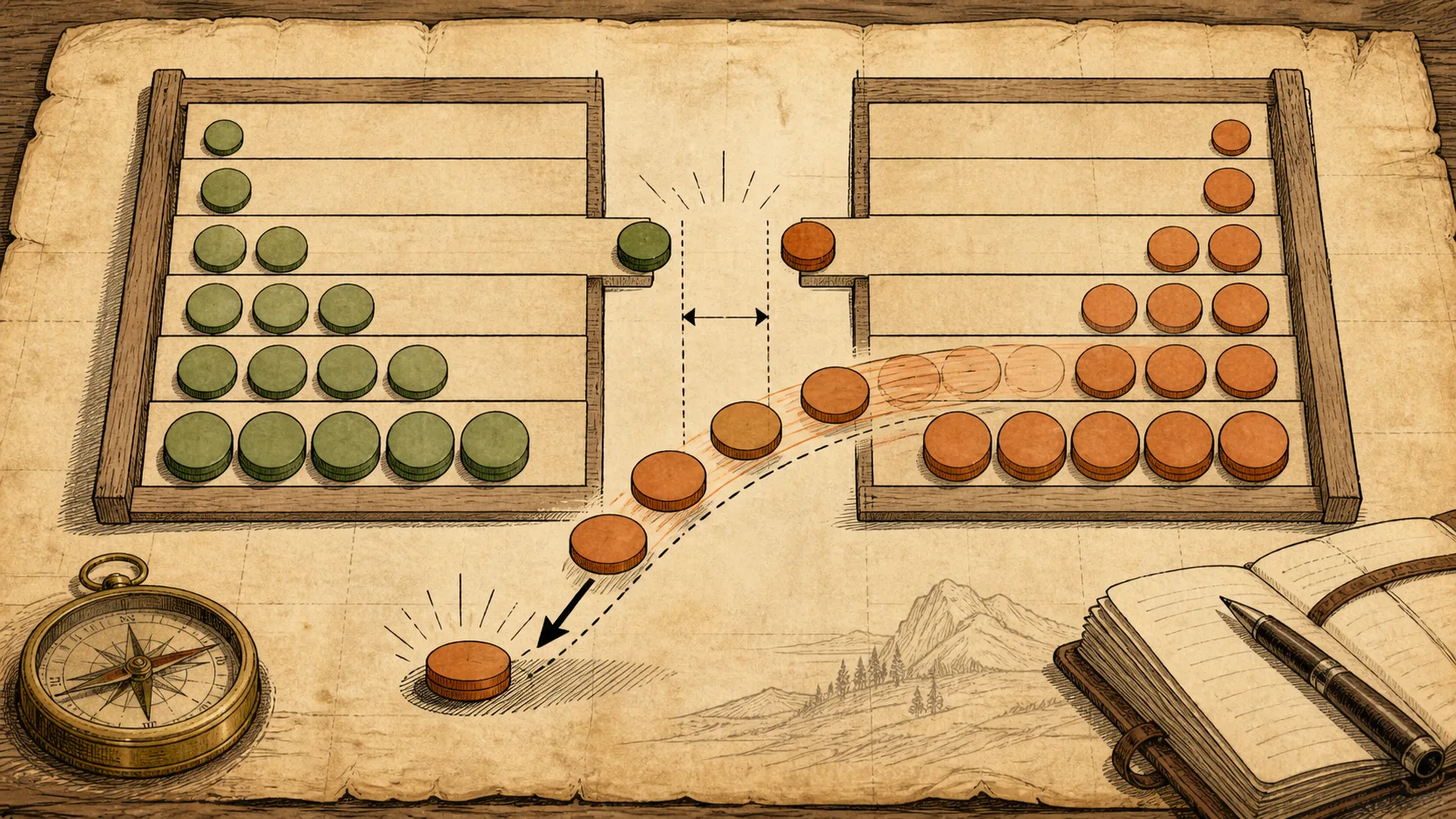
Trading BasicsWho decides the price in a financial market? A beginner-friendly guide to Bid, Ask, Last, Spread, liquidity, and how a trade actually fills.
Trading BasicsLeverage allows traders to control a larger position with a smaller amount of capital. This guide explains how it works, why traders use it, and the risks beginners should understand.