
A leading hyperscale cloud provider reports record quarterly revenue of $30 billion and a glowing net profit of $6 billion on its income statement. Retail forums celebrate what looks like an unstoppable profit machine.
Yet professional equity analysts look straight past the net income line down to the cash flow statement. There, they discover the company spent $7 billion on cutting-edge GPU clusters and data center land—its Capital Expenditures (Capex). Because operating cash flow was $8 billion, the business generated just $1 billion in actual Free Cash Flow (FCF). Why does this single formula matter so much to Wall Street? Because you cannot pay dividends, buy back shares, or service debt with accounting profits; you can only pay them with cash.
Capital Expenditure (Capex) is the cash a company reinvests into physical, long-term productive assets like manufacturing plants, servers, and logistics hubs. Free Cash Flow (FCF) is the cash remaining after covering operating costs and Capex: `Operating Cash Flow − Capex = Free Cash Flow`. Accounting net income spreads Capex out over many years via depreciation, which can make a company look highly profitable on paper even while heavy cash spending completely drains its checking account.
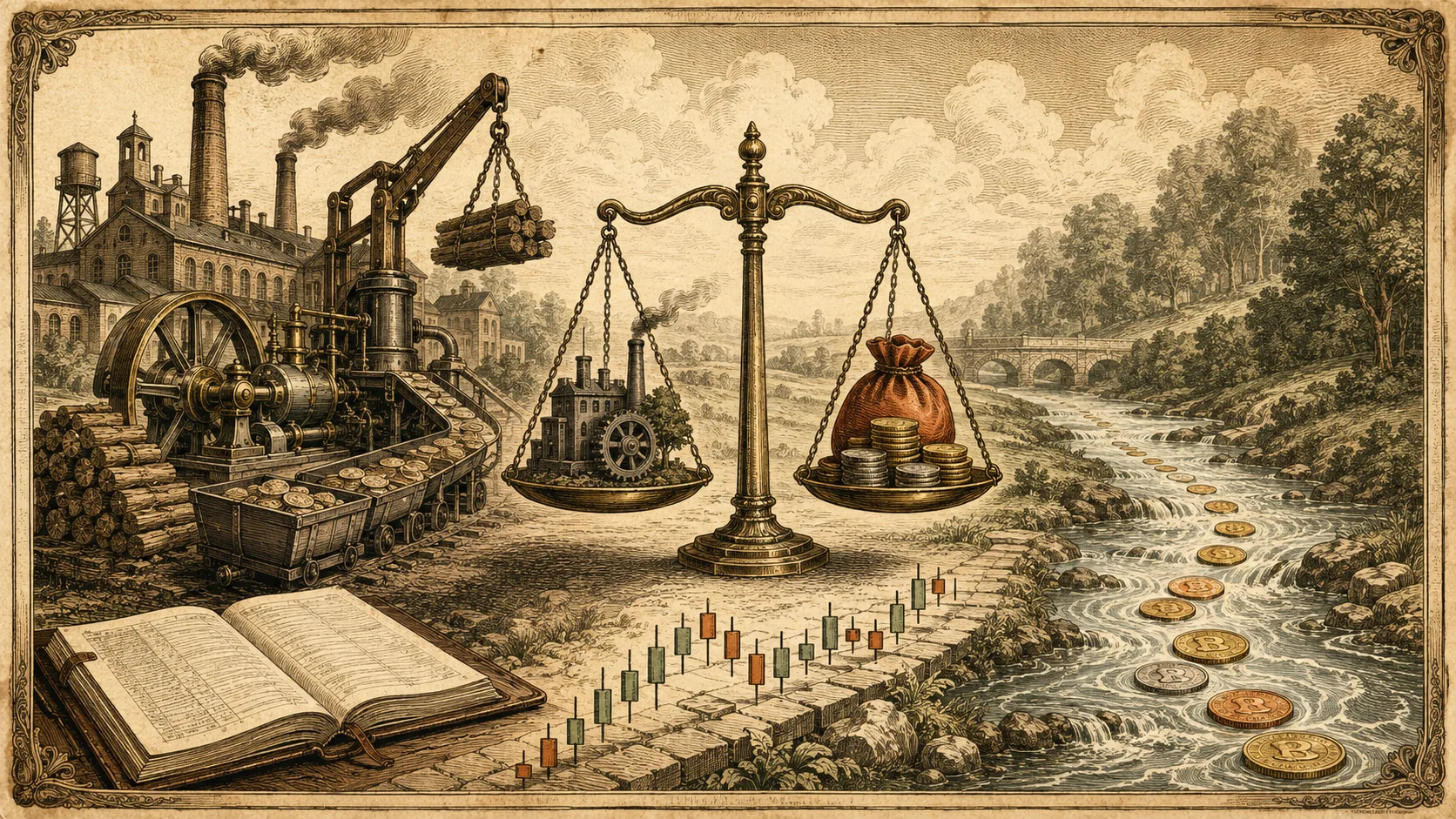
The Financial Waterfall: From Revenue to Free Cash Flow
To understand where cash actually goes, imagine a waterfall with four distinct levels:
1. Revenue (Top Line): The gross dollar value of goods or services billed to customers.
2. Accounting Net Income: Revenue minus cost of goods sold, operating expenses, interest, taxes, and non-cash depreciation charges. This is the famous 'bottom line' that headlines quote.
3. Operating Cash Flow (OCF): The actual cash generated by running the core business, adjusting for working capital changes (like unpaid customer invoices and inventory buildup).
4. Free Cash Flow (FCF): The final prize. You take Operating Cash Flow and subtract Capex: `FCF = OCF − Capex`. This represents the unencumbered cash management can freely return to shareholders or deploy for strategic acquisitions.
| Dimension | Maintenance Capex | Growth Capex |
|---|---|---|
| Core Purpose | Replacing worn-out equipment just to maintain current production capacity | Building new factories, data centers, or stores to capture future market share |
| Is It Optional? | No. Delaying it causes operational decay, breakdowns, and market share loss | Yes. Management can pause or cancel projects if cash conditions tighten |
| Impact on Future Cash | Preserves existing cash flow baseline without adding new growth | Depresses current Free Cash Flow today in exchange for higher cash flows tomorrow |
| Investor Perspective | Treated as an ongoing cost of doing business | Evaluated on Return on Invested Capital (ROIC); good only if returns beat cost of capital |
Accounting rules lump both maintenance and growth capex into one single line on the cash flow statement. Fundamental analysts must study earnings calls to estimate how much spending is truly discretionary.
The Depreciation Illusion: Why Income Statements Distort Cash
When an airline buys a $100 million jet, accounting rules do not deduct $100 million from this quarter's net income. Instead, they capitalize the jet on the balance sheet and deduct a 'depreciation expense' of $5 million per year for the next twenty years.
On the income statement, the company appears comfortably profitable because the huge cash outlay was smoothed into tiny non-cash slices.
On the cash flow statement, however, the entire $100 million left the bank account on day one. If you only look at the P&L statement, you will miss the reality that the business may be burning through liquidity at an unsustainable pace.
Warren Buffett famously coined the term 'Owner Earnings' to warn investors against ignoring Capex. If a company must spend every dollar of its operating profit on new machines just to stay competitive against rivals, the reported accounting profits are an illusion. What truly belongs to owners is only the cash left over after all necessary capital reinvestment is paid.
Frequently Asked Questions
Can negative Free Cash Flow ever be a positive sign for investors?
Yes, for early-stage or high-growth businesses with verified unit economics. If a high-return company burns cash temporarily because it is aggressively deploying productive infrastructure that out-earns its cost of capital, negative FCF can represent sound reinvestment and long-term value creation rather than structural distress.
What is the difference between Capex and Opex (Operating Expenses)?
Opex covers day-to-day ongoing expenses consumed within the current period (like employee salaries, office rent, and utility bills). Capex covers physical or capitalized assets that provide economic utility over multiple years (like manufacturing equipment and server infrastructure).
Why do debt-rating agencies care more about FCF than EBITDA?
EBITDA completely ignores capital expenditures. A company with high EBITDA can still default on its bonds if mandatory equipment maintenance drains all available liquid cash before interest payments are met.