
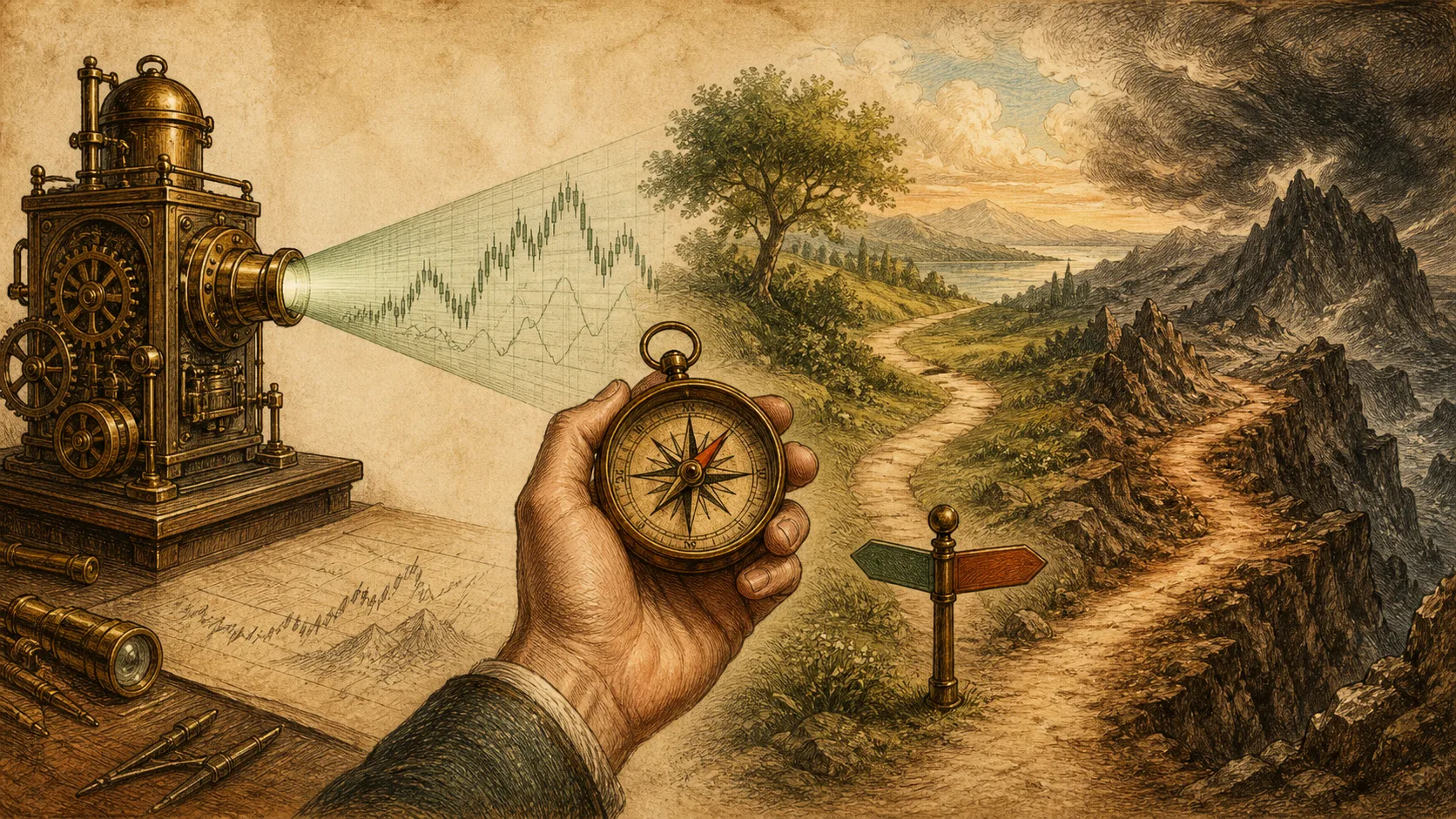
An AI tool can rank candidates, summarize a debate, or flag a pattern. It can even sound like it is making a decision. But a signal and a decision are different things: one is information, the other is a commitment with risk attached.
Knowing where the model ends and your judgment begins is what keeps automation useful instead of dangerous.
An AI output is a signal: information to be evaluated. A decision is a commitment with risk, size, and an invalidation point attached. The model can surface candidates but cannot own the consequences. Keep the judgment on the human side: verify the signal, size the risk, and stay responsible for the exit.
A Signal Is Not a Decision
A signal is information: a candidate flagged, a pattern recognized, a summary produced. It is input to a process, not the end of one.
A decision is a commitment: acting on the information, with a defined risk and a defined exit. The difference is that a decision has consequences the signal does not.
What AI Can Legitimately Offer
AI is strong at organizing information: ranking candidates, summarizing research, and catching patterns in text or data. These are all signals that a human then evaluates.
Used that way, AI is an amplifier of research speed. The value comes from the human applying judgment to what the tool surfaces.
| Dimension | Signal | Decision |
|---|---|---|
| What it is | Information to evaluate | A commitment with risk |
| Who can produce it | AI or a human | A human who owns the result |
| Has risk attached? | No | Yes |
| Includes an exit? | No | Yes |
Why the Boundary Matters
If the model is treated as the decision-maker, its lack of risk ownership becomes invisible until a loss arrives. Nobody is accountable for the size, the stop, or the timing, because the model had none of those.
If the model is treated as a signal source, the accountability stays clear: the human verifies the signal, sets the risk, and owns the exit.
Whatever the tool flags, the risk decisions — size, stop, exit — belong to the trader. Keeping the model on the signal side is what keeps it a tool rather than a replacement for judgment.
How to Keep the Boundary Clean
Treat every AI output as a candidate that needs verification: check the signal against the data, then decide the size and stop from the risk budget.
The decision process stays human: the signal informs, the plan decides, and the trader owns the outcome. If the model is drafting a plan, treat the draft as research, not as a commitment.
| Step | What the AI signal provided | What the human decision has to add |
|---|---|---|
| Candidate | Stock Y flagged as a candidate on a bullish divergence | — |
| Size | Not provided | Share count solved from account risk |
| Stop | Not provided | A defined invalidation price |
| Exit | Not provided | A profit-target or time-stop rule |
The AI signal ends at 'flagged as a candidate.' The account capital, the 1% risk budget, the $47 stop, and the 333-share size are all numbers the human works out after receiving the signal — and owns the consequences of. That is exactly what the boundary between a signal and a decision looks like in practice.
Frequently Asked Questions
Can AI make a trading decision for me?
It can produce something that looks like a decision, but a decision includes risk, size, and an exit. Those belong to the trader who owns the consequences.
How do I keep the model as a tool?
Use its output as a signal to verify and evaluate, then make the risk decisions yourself. The plan and the exit stay on the human side.
Is it wrong to let AI draft a plan?
No, but treat the draft as research. The final plan, its risk, and its exit are commitments you own.