
To a novice opening a trading terminal for the first time, all currency tickers look practically identical. EUR/USD, EUR/GBP, and USD/TRY are each represented by six letters and a flashing price quote.
Yet treating them as interchangeable is one of the quickest ways to run into brutal transaction friction. Behind those ticker symbols lie vastly different market structures: EUR/USD clears trillions of dollars daily with razor-thin spreads, EUR/GBP trades actively between two major economies without involving the greenback, while USD/TRY links the world reserve currency to an emerging economy characterized by wide bid-ask spreads and sudden liquidity vacuums.
Understanding how major, cross, and exotic pairs differ is not just a matter of textbook taxonomy; it dictates your realistic trading costs, execution quality, and risk exposure.
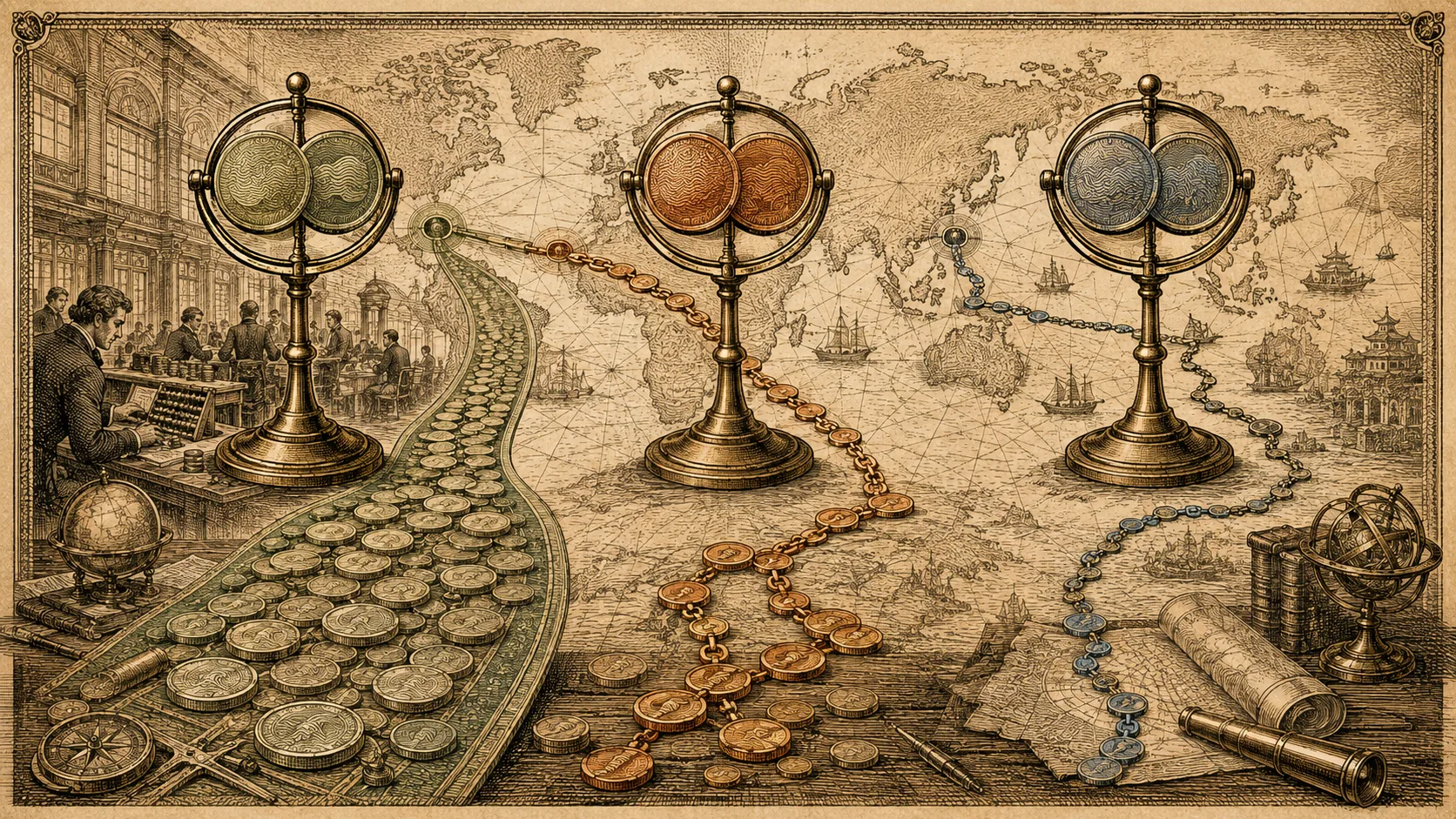
Major pairs feature the US dollar paired with another major global currency (e.g., EUR/USD, USD/JPY), offering the deepest liquidity and tightest spreads. Cross pairs (or 'crosses') pair two major non-dollar currencies (e.g., EUR/GBP, AUD/JPY), eliminating direct USD exposure but carrying slightly wider spreads. Exotic pairs combine a major currency with a currency from a developing or smaller economy (e.g., USD/TRY, USD/MXN); they suffer from significantly wider spreads, high overnight carry fees, and sharp slippage risk during off-market hours.
| Category | Core Definition | Representative Examples | Typical Spread Profile | Liquidity & Slippage Risk |
|---|---|---|---|---|
| Major Pairs | US dollar paired with a major global currency | EUR/USD, USD/JPY, GBP/USD, USD/CHF, AUD/USD | Ultra-tight (often fractional pips in active sessions) | Highest liquidity globally; minimal slippage under normal conditions |
| Cross Pairs | Two major economies without the US dollar | EUR/GBP, EUR/JPY, GBP/JPY, AUD/NZD, EUR/AUD | Moderate (generally wider than majors due to synthetic hedging frictions) | Deep liquidity during regional overlaps; sensitive to regional policy divergences |
| Exotic Pairs | One major currency paired with an emerging/smaller economy | USD/TRY, USD/ZAR, USD/MXN, EUR/PLN, USD/SGD | Wide (consistently wider than majors and highly sensitive to liquidity shifts) | Thinner order books; severe gapping and slippage risk, especially overnight |
- The US Dollar Is the Nexus: Because global interbank liquidity is predominantly settled in US dollars, cross pairs are mechanically calculated and hedged through two underlying dollar legs.
- Spreads Are Concrete Costs: A tight spread on EUR/USD means your trade needs to move very little to break even. A wide spread on exotic pairs requires a noticeable favorable price move just to cover the broker's entrance friction.
- Financing Terms and Overnight Swaps: Emerging market currencies frequently carry large interest rate differentials. Depending on trade direction and broker financing policies, overnight swap charges or credits can significantly influence net holding returns.
- Session Clocks Matter for Crosses: EUR/JPY and GBP/JPY see peak volume when the London and Tokyo sessions overlap, whereas USD pairs remain active throughout the New York hours.
Frequently Asked Questions
Why do cross pairs usually have wider spreads than major pairs?
Interbank liquidity providers often price crosses synthetically by hedging across two separate USD legs (for example, pricing EUR/GBP by trading EUR/USD and GBP/USD). Quoting two legs incurs two separate transaction frictions, which is passed on to traders as a wider spread.
Are exotic pairs good for retail swing trading?
Generally not for beginners. While their volatile price charts look tempting, wide bid-ask spreads, sudden liquidity dry-ups outside local banking hours, and heavy overnight financing fees make holding exotic positions expensive and unpredictable.
Does a currency pair's category change over time?
Categories reflect global economic size and central bank liquidity rather than day-to-day news. While emerging markets can gradually mature over decades, the list of major currencies (USD, EUR, JPY, GBP, CHF, CAD, AUD, NZD) has remained essentially stable for modern retail trading.