
Separate threatened disruption from verified lost production, shipping, or delivery.
Why Can Oil Rise During a Conflict While Gold Falls?
Geopolitical headlines invite instant rules: war means oil up, gold up, stocks down. Real markets are messier. Oil first cares about physical flows; gold also trades rates, dollars, positioning, and liquidity. We’ll start with a real 2026 session that broke the familiar script.
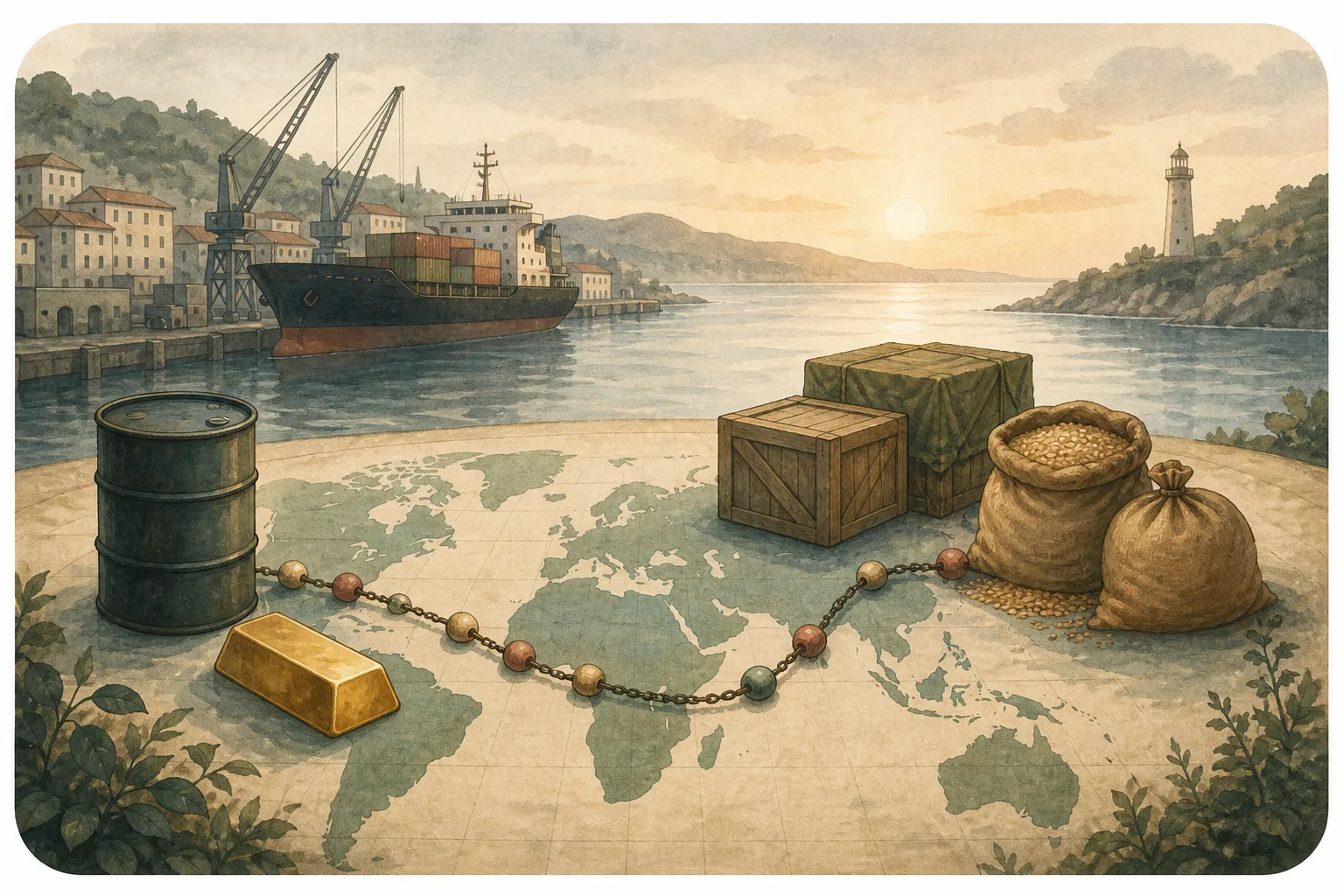
- Separate a geopolitical headline from the physical supply change it may cause.
- Use inventories, substitutes, shipping routes, and demand to judge whether a disruption can persist.
- Distinguish the physical-supply channel from the safe-haven channel.
- Tell a short-lived headline reaction from a structural shift in commodity fundamentals.
Oil Jumped and Stocks Fell. Did Gold Follow the Safe-Haven Script?
On June 3, 2026, fighting in the Middle East intensified again near critical energy routes. Brent crude moved toward $100 as traders worried about supply, while the S&P 500 fell. If you learned the shortcut “geopolitical stress = buy gold,” the next move may seem obvious.
Middle East fighting intensified on June 3. Oil rose and U.S. stocks fell. What would you expect gold to do that day?
Choose your first instinct before seeing the observed cross-asset move.
The point is not that geopolitical risk is bad for gold. The point is that different assets receive the same event through different channels. Oil reacts first to threatened production and shipping flows. Gold may react to fear too, but it is also being repriced through the dollar, interest rates, investor positioning, and demand for cash.
A Geopolitical Event Reaches Commodity Prices Through Physical Steps
A war, sanction, port attack, or shipping-route closure matters to a physical commodity only if it changes production, transport, deliverable supply, or expected future availability. Even then, inventories and substitute supply can absorb part of the shock, while high prices can reduce demand.
- 1Measure what is actually disruptedSeparate a threat from lost barrels, tons, or cargoes. The size of the physical interruption matters more than the tone of the headline.
- 2Check inventoriesLarge stocks give consumers time to bridge a temporary gap. Thin inventories make the same disruption more urgent.
- 3Look for substitutesAlternative producers, routes, grades, pipelines, or transport options can reduce the amount of shortage that price must ration.
- 4Let demand respondWhen prices rise sharply, refiners, companies, and consumers can cut usage or delay purchases, softening the original supply shock.
Why Did Oil Fall When Hormuz Was Still Not Fully Normal?
By June 23, U.S.-Iran talks had improved and some tanker traffic through the Strait of Hormuz was recovering. The waterway was still constrained, with mines, insurance problems, and congestion unresolved. Even so, Brent settled about 1.1% lower at $77.08 and WTI about 0.9% lower at $73.21.
Oil did not wait for every physical problem to disappear. Traders began repricing the probability that future crude flows would improve. This is the same reason a geopolitical premium can fade before the headlines become calm: commodity prices respond to the expected path of supply, not just today's snapshot.
| Backdrop | Typical implication |
|---|---|
| Low inventories + few substitutes + strong demand | A disruption is harder to absorb, so spot tightness can persist |
| High inventories + many substitutes + weak demand | The same disruption can fade faster as the system adapts |
| Expected future flows improve | Prices can fall before the physical system is fully repaired |
Gold Is Not Oil With a Different Label
Oil is consumed and transported through a physical network. Gold trades partly as a monetary and financial asset. During a geopolitical shock, gold can attract defensive demand, but that demand competes with moves in real yields, the U.S. dollar, existing positioning, margin calls, and broader liquidity needs.
That is why the June 3 session matters. Brent rose and equities fell, yet gold declined roughly 1%. A single day does not disprove gold's long history as a defensive asset. It simply shows why “war = gold up” is too crude to be a trading rule.
Four Questions Before You Trade a Geopolitical Headline
Inventories, substitute suppliers, alternative routes, and spare capacity decide how much of the shock survives.
If price fully reverses as flows normalize, the move looks more like a headline reaction than a structural shortage.
Put Your Understanding to the Test
Use the transmission chain. You do not need to predict the exact next price move.
Question 1 of 3
A major shipping route is disrupted, but inventories are high and several substitute routes exist. What is the best first conclusion?
Question 2 of 3
Why can oil prices fall before a damaged shipping system is fully restored?
Question 3 of 3
Gold falls on a day when geopolitical tension rises. What is the strongest interpretation?
Stuck? Ask Mira to Break It Down
Checking sign-in status...